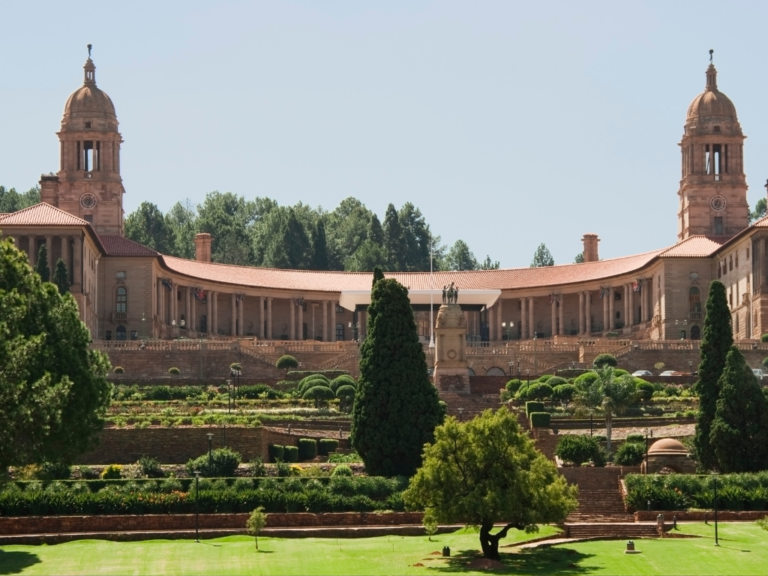
(Budget vote debate in Parliament: Public Works and Infrastructure)
Wilfully blind and deaf to all around is the best way to describe the ANC government's attitude towards the present decline of infrastructure in South Africa.
A journey through South Africa paints a picture of the utter decline of roads, railways, ports, waterworks and sewage plants, electricity provision, stormwater systems and everything else that was once properly maintained and in working order.
In addition to the visible signs of deterioration, departmental reports on the serious level of decline with urgent recommendations to take action are frequently issued. But it falls on deaf ears.
It seems that citizens may have to make peace with taps running dry, sewage flowing through their properties and potholes in roads that cost innocent people their lives.
People are becoming more and more defiant because of the unreliable power provision, poor public transport and the utter decline of the country's railway networks, a lack of toilet facilities at schools and even a shortage of water at hospitals and clinics. Sewage pollution has become a serious threat to food production. The list is endless and sounds like something out of a horror story.
According to the research company Intellidex, South Africa spent approximately R70 billion less than what was budgeted on infrastructure. Their findings also indicate that the private sector has started to provide the skills and resources, which are lacking in the public sector, to address infrastructure challenges.
The lack of skills in the public sector has placed a significant restriction on infrastructure management. The main cause of this is ANC policy, like Affirmative Action (AA) and Black Economic Empowerment (BEE), which has lead to the loss of skills and expertise.
According to the Sector Education and Training Authority, the biggest shortcomings in the public sector are the following:
• Financial management.
• Policy development and analysis.
• Leadership and management.
• Strategic management and leadership.
• Programme and project management.
The Department itself has pointed out in a report that the key risk areas include the ineffective implementation of government compliance processes, bad debt, a failure to achieve service delivery targets, poor maintenance and the subsequent decline of infrastructure, a failure to achieve job creation targets and overall poor service delivery. The detrimental effect of all this also paralyses other departments.
This raises the following question: What is the purpose of the Department of Public Works and Infrastructure if it cannot fulfil its mandate? At present, there is a backlog with the upkeep of 93 000 government facilities.
Other public enterprises owe the Department R3,1 billion, which further exacerbates its financial problems and is one of the main reasons for the infrastructure decline. And yet billions of rand are spent on trying to save failed enterprises, like the SAA, from financial ruin and millions are squandered on changing the names of cities and towns.
Absolutely nothing came of the Expanded Public Works Programme that was supposed to have created nearly a million new jobs by the end of last year.
And then there are still unanswered questions about what Minister Patricia de Lille is going to do about the Beitbridge corruption scandal and the chaos that broke out with quarantine facilities last year.
And there is still no clarity on the Kosi Bay project where a wall of just 200 metres cost R48 million. The FF Plus is still waiting for an investigation into the matter to be conducted.