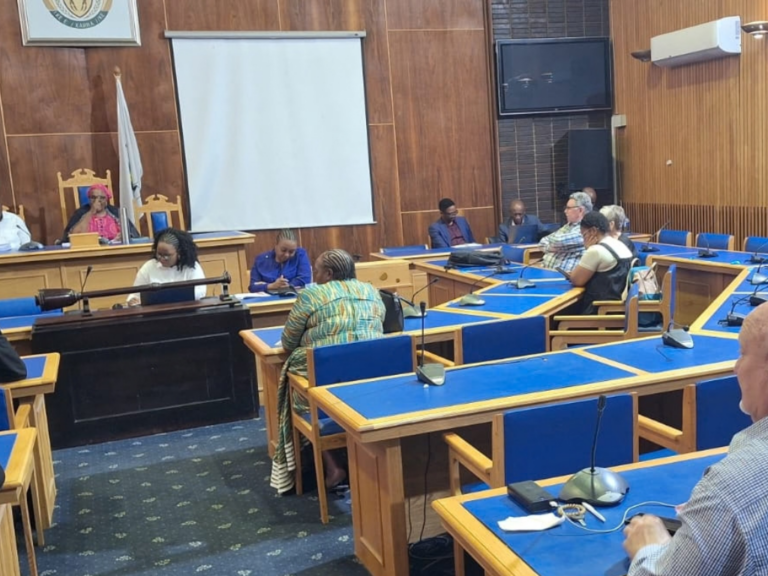
(Debate in Parliament: Amendment Bills to curb gender-based violence)
Gender-based violence is a reality in South Africa and yet there exists this idea that violence between intimate life partners or marriage partners is a "private affair" that should be handled within the family circle.
This perception may be linked to the degrading and dismissive way in which the public and many law-enforcement agencies treat such incidences.
In most cases, victims decide not to report these crimes or they refuse to press charges due to pressure from family members and the low probability that offenders will be convicted.
Due to these factors, victims of gender-based violence often have to overcome various obstacles in their pursuit of justice, while offenders in gender-based violence get off scot-free or with a mere rap on the knuckles.
Many gender-based violence crimes are committed by repeat offenders or by accused individuals who are awaiting trial and were released on bail.
Police officers are usually hesitant to intervene in so-called "family matters" and the justice system is riddled with stereotypes and prejudices toward victims of gender-based violence, which further traumatises them.
Therefore, the FF Plus welcomes the three amendment bills, namely the Criminal and Related Matters Amendment Bill, Criminal Law (Sexual Offences) Amendment Bill and Domestic Violence Amendment Bill, which not only aim to offer individuals better protection, but will also serve as a deterrent for offenders to prevent the recurrence of gender-based violence (GBV). The main objectives include making the criteria for granting bail more stringent and to expand the series of offences for which minimum sentences can be passed.
The Domestic Violence Amendment Bill expands the definition of domestic violence to include persons who are partners in engagements, common law relationships, romantic, intimate or sexual relationships, regardless of the duration of these relationships. This definition is important as it will make a significant difference to the lives of those who have borne the brunt of domestic violence and who were previously excluded in terms of the law and, thus, struggled to obtain remedies, such as protection orders.
The most positive amendment is the stipulation that a person may be fined or even imprisoned if he / she knows, or believes or suspects on reasonable grounds, that an act of domestic violence has been committed against a child, a person with a disability or an older person and fails to report it to a social worker or police officer.
Expanding the obligation to report domestic violence will ensure that victims' ordeals are positioned in the public domain and that will help them break their silence.
It is still unclear whether imposing longer sentences will curb gender-based violence, but it could go a long way in restoring the public's faith in the legal system, particularly when victims were left disillusioned by the discrepancy between the seriousness of the offence and the sentence imposed.
The implementation of more stringent measures relating to bail applications will probably prevent gender-based violence offenders from finding and exploiting legal loopholes to avoid imprisonment; likewise, it will impose new responsibilities on the police, prosecutors and the bench in their consideration of bail applications.
The proposed amendments require prosecutors to record their reasons for not opposing bail for offenders.
In addition, courts are under the obligation to order that an accused must be detained until criminal proceedings have been completed in the absence of exceptional circumstances as to why bail should be granted to the accused.
All the abovementioned amendments are indeed honourable, but whether they will prove to be effective in curbing gender-based violence remains to be seen.